January 2012

February Issue Now Available for Online Browsing

6:08 pm

Open publication – Free publishingMore camping

Click the thumbnail above to check it out. Exact same contents as the printed issue. Great news piece this month on Spokane High School runners competing in Scotland.

News |

Free Leadership Workshops

7:23 pm


The week of January 23rd Spokane, Coeur d’Alene & Post Falls Toastmaster Clubs will be hosting a series of workshops to present and showcase skills in coaching, team-building, delegating, resolving conflict, motivating employees and goal setting.

Experienced members of the club will present and teach these valuable skills to our community, skills necessary to be successful and to thrive in today’s business and education environments. We would like to invite you to join us at any of the member clubs. You can attend one or all of the workshops:

• Monday, January 23rd “Conflict Resolution” – 6:15am-7:15am at Perkins Restaurant – Division & Trent, Spokane
o By: Lamplighters djrahmer@yahoo.com 509-443-1684
• Monday, January 23rd “The Visionary Leader” & “Service and Leadership” – 12:00pm noon – 1:00pm at Integrus Archicture – 10 S Cedar, Spokane
o By: Carnegie Square mplummer@volt.com 208-699-9009
• Tuesday, January 24th “Leadership Toolbox” – 6:30am-7:30am at Something Else Deli – 152 S Sherman, Spokane
o By: Gaveliers inlandempiretours@hotmail.com 509-747-1335
• Tuesday, January 24th “Delegate to Empower” – 8:30am – 9:30am at Boy Scouts of America – 411 W Boy Scout Way , Spokane
o By: Non Proferati tmccandl@bsamail.com 509-242-8249
• Tuesday, January 24th “Servant Leadership” & “Developing a Mission” – 12:05pm – 1:00pm, Downtown Public Library – 906 W Main Room 1B, Spokane
o By: Uptowners debbusiness09@comcast.net 509-863-4461
• Tuesday, January 24th “Values & Leadership” – 6:30pm-7:30pm – Monastery of Saint Clare – 4419 N Hawthorne Street, Spokane
o By: Clare’s Clan srl@icehouse.net 509-327-4479
• Wednesday, January 25th “Leader as a Coach” & “Building a Team” – 11:30am-12:30pm – Inland Lighthouse for the Blind, 6405 N Addison, Spokane
o By: Vision Speaks mdavis@seattlelh.org 509-487-0405
• Wednesday, January 25th “Values & Leadership” – 12:05pm-1:00pm – Faith Bible Church, 600 W Cora, Spokane
o By: Lunch Bunch tracy.vanorden@avistacorp.org 509-495-4942
• Thursday, January 26th “World Class Goal Setting” – 6:30am-7:30am – Paulson Building, 421 W Riverside, Room 805, Spokane
o By: Evergreen rich.schaus@ugmspokane.org 509-449-9131
• Thursday, January 26th “Giving Effective Feedback” & “Motivating People” – 5:30pm-6:30pm – Corbin Senior Center, 827 W Cleveland, Spokane
o By: Moonlighters info@moonlightersspokane.org 509-466-7583
• Thursday, February 2nd “Presidents – Characteristics of Effective Leadership” – 7:00am-8:00am – Fire Station #3, 1500 N 15th, Coeur d’Alene
o By: Talk of the Town talkofthetowncda@hotmail.com 208-704-5785
• Friday, January 27th “Giving Effective Feedback” & “Motivating People” – 12:00pm noon – 1:00pm, Mountain West Bank, 125 Ironwood Drive, Coeur d’Alene
o By: Lake City Club mrsabear@roadrunner.com 208-635-5487
• Thursday, February 16th – “Service & Leadership” & “Delegate to Empower” – 6:30am – 7:45am – Templins Red Lion Hotel, 414 E First Avenue, Post Falls
o By: Post Falls Club brownrice37@gmail.com 208-773-4681

Details are also posted on our district website: http://d9.toastmastersdistricts.org/

About Toastmasters International
Toastmasters International is a nonprofit educational organization that teaches public speaking and leadership skills through a worldwide network of clubs. Founded in October 1924, the organization currently has more than 270,000 members in 13,000 clubs in 116 countries. Each week, Toastmasters helps more than a quarter million people of every ethnicity, education and profession build their competence in communication so they can gain the confidence to lead others. For information about local Toastmasters clubs, please visit www.toastmasters.org.

News |

See The New Gear Here First

2:50 pm

Want to know about all the coolest winter outdoor gear? OTM partners in the Outdoor Adventure Media network went to the worlds largest outdoor trade show last week and sent back this cool video report.

Cool Stuff |

Monday deadline for fit for Bloomsday sign up.

3:10 pm

This just in….

> MONDAY DEADLINE FOR /FIT FOR BLOOMSDAY/ SIGN-UP
> Schools Have Until January 23rd to Enter
>
> January 20, 2012—Elementary schools in Eastern Washington and North
> Idaho have until Monday to sign up for the /Fit for Bloomsday…Fit for
> Life/ youth fitness program. After the entry deadline, over 60 schools
> are expected to have signed up, with nearly 6,000 kids participating in
> the ten-week running and walking program. (more…)

News, Volunteer |

5:27 pm

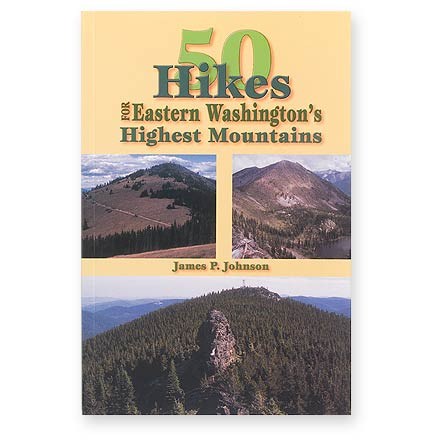
Hiking the Highest Peaks in Eastern WA


A Talk with the Man Who Wrote the Book


By Juliet Sinisterra


Snorkeling in the Bahamas, exploring the Baja, hiking in the Canadian Rockies-you have seen the ads in Outside Magazine and long to have an adventure of your own, but you just don’t seem to have the disposable cash or the vacation time.

What about Eastern Washington? Have you considered exploring our own bioregion? Why not scale all 7,210 feet of Hooknose Mountain near Colville or explore the Blue Mountain Range near Walla Walla? James P. Johnson, the author of 50 Hikes for Eastern Washington’s Highest Mountains, loves the thrill of climbing a mountain, enjoying the view and being home before dinner.

“In the early ’90s, I hiked up Mt. Abercrombie-the second highest mountain [in Eastern Washington]. I had lived here all my life and I was completely unaware there were such high mountains in our region, and so many of them,” says Johnson.

Johnson, an avid hiker, spent eight years researching, writing and hiking mountain peaks for the book. An elementary school teacher at the time, he devoted four of his summers to personally hike each of the mountains at least once.

“Some mountains are really easy to access-you can drive a car right up to then-some are very remote, an all day hike. If you had the whole summer and were really dedicated you could do them all. Once I hiked five in one day.”

When Johnson began his pursuit of Eastern Washington’s highest peaks he started at the map store. “There was no compilation of the highest mountains, so I began looking at USGS topographic maps,” says Johnson. Johnson took the names of each of the peaks from the maps, but found little background as to why each mountain was named. “I found hardly any research on names, history and there were no records of first ascents, probably due to the ease of the hikes,” says Johnson.

The hikes that Johnson lists are just that, they are not technical climbs. Every hike included can be climbed in a day or less and requires no specific gear or equipment. Many are suitable for young children. Johnson views the ease of each climb as one of the benefits of our region. With less danger involved, hikers can access high country earlier in the season.

The other benefit for Johnson, is that not many people know about these hikes. “I have hiked in British Columbia, Banff and the North Idaho Selkirks-our mountain peaks are not quite so spectacular, but if you love the outdoors, you can get out and appreciate it without the crowds. At times I have hiked on a holiday, or a busy summer weekend and have seen very few other people along the trail, and at times been a solitary hiker.” As a way to commemorate reaching the top, Johnson has built on the more remote, higher peaks, a few rock cairns at the summit, and has placed a canister inside with a sign-in log.

Several of the peaks listed in the guidebook, are managed for resource extraction primarily, they are not on protected public lands. “You pass through ripped up, torn apart landscape. Like the Salmo-Priest area-it seems so small on a map, but when you are there, standing on those peaks, the valley and slopes have all been logged. You can see the clearcut everywhere, the wilderness has been taken away. Hopefully by visiting these mountains, more people will pay attention and logging can be done in a more thoughtful manner,” says Johnson.

When Johnson began shopping his guidebook around, he found almost no interest from over hundreds of publishers. He had just about shelved the idea when in 2002 he discovered a small Oregon publisher, Frank Amato Publications, Inc. that primarily published fishing books. “I was at the bookstore and I noticed that they also had some hiking books, so I sent them a manuscript.” They agreed to publish the book almost immediately. Since then, 50 Hikes, has received a lot of local interest and support from local bookstores. Johnson is very happy with how it has been doing.

Johnson’s objective in publishing the book was to bring more awareness to the beauty of our bioregion, to allow us connect with our immediate landscape. “Being surrounded by the Cascades, the Canadian Rockies and Glacier is great, but if you only have one day available, you can go see something spectacular right around here,” says Johnson.

And if you are looking for that unique experience that comes with a true adventure look no further than the alpine toad. While hiking, Johnson has seen the prerequisite black bears, moose and even elk, but the animal he saw the most frequently were toads. “You expect to see a toad near a pond but not near the top of a 6,000 foot peak. The alpine toad seems to be everywhere. They seem to have quite the range in elevation.”


News |

Book Reviews: October 2006

3:52 pm

K2: The Price of Conquest
Lino Lacedelli and Giovanni Cenacchi
Mountaineers Books, September 2006, 127 pages.

K2: The Price of Conquest, critically examines the successful 1954 Italian expedition that put two climbers atop K2. In doing so the authors join David Roberts, who in 2000 cast a critique on Maurice Herzog’s classic Annapurna, and Richard Sale who’s 2004 work Broad Peak questions the commonly held views of the first ascent of Broad Peak in 1957. Heralded a half-century ago as accomplishments of supreme team spirit, these recent works suggest much dissent and conflict not portrayed in the official expedition records.

Late in the afternoon on July 31, 1954, Achille Compagnoni and Lino Lacedelli reached the summit of K2. The climbers barely reached base camp before questions arose over actions taken that de facto eliminated Walter Bonnati from the summit party. Then, rumors of misdeeds by Bonatti appeared in the Italian press shortly after the expedition’s return to Italy. The controversy, widely publicized in Italy, received little press attention outside that country.

In K2, Lacedelli and Cenacchi attempt to clear up discrepancies between the official record of the climb written by expedition leader Ardito Desio and the recollections of climbing members of the expedition. Presented mostly in an interview format, coauthor Cenacchi poses questions to Lacedelli. The summiter’s answers reveal a divided expedition willing to ignore the expedition leader in order to achieve the summit; he reveals a team split by favoritism. Lacedelli reveals that co-summiter Achille Compagnoni intentionally moved the location of the final high camp to thwart Walter Bonnati’s chances for the summit. The image in K2 conflicts with the image of a harmonious cooperative venture painted by expedition leader Ardito Desio in Ascent of K2, the official account of the expedition.
Loaded with historic photographs, K2 provides the reader with a historic perspective of 1957 climbing equipment and technique. However, dealing mostly with the righting of wrongs earlier in narratives, it’s a book about people and politics more than climbing. A good read primarily for the historian.

Stan Miller


Perishable: A Memoir

Dirk Jamison
Chicago Review Press, April 2006, 212 pages.

For years, scientists believed that parents acted as the primary hammer and chisel in shaping children’s personalities. Later, genes were seen as the key sculpting force. Later still, it was peers.

Now, research suggests that siblings may be the main artisans.

If so, what to make of a boy whose parents and siblings swap roles in an especially unusual fashion: a father who refuses to work, dubs himself Aark the Heathen Scavenger and takes to feeding his kids by dumpster diving; a mother who vanishes into her room to eat store-bought candy bars while reading romance novels and the Book of Mormon; a brother ghostly in his absence; and a sister who devises tortures so fantastic as to make Abu Ghraib look mundane.

Perhaps eastern Oregon native Dirk Jamison had little choice but to become a writer, for such a childhood may find context only in a book. Tightly written in innocent but never childish prose, Perishable is a story that rollicks in its own horror and finds a mysterious order in familial anarchy.

The book opens with Mother complaining that Dad has eaten the entire heart out of another watermelon. “‘I told him he’s being selfish … You should only take your share of the best part.’”

Dad speaks to Dirk, who is seven, about Ayn Rand’s The Virtue of Selfishness. When a person tells him he’s being selfish, Dad warns his son, “you gotta pay attention. It means somebody wants to keep you from doing what you want.”

Through Father, we feel an almost psychotic freedom. In Mother we see a woman who fails to recognize that her miseries come primarily from within. From Sister, we see a display of that inexplicable sibling savagery.

Jamison allows us to decide what it all means-a task that becomes comforting in its impossibility. Forty years old now, the author, too, seems to have made peace with the impenetrability of his childhood.

Eric Slater

The Art of Urban Cycling: Lessons from the Street
Robert Hurst
Falcon, July 2004, 272 pages.

My pain of ten weeks nursing a broken foot and not being able to cycle has been greatly eased by reading Robert Hurst’s definitive treatise on getting by on a bicycle in the American City. The Art of Urban Cycling tells it like it is. Hurst draws a historical procession of American’s love of the bicycle at the end of the 19th century and the beginning of the 20th century to the total love of the automobile today. Compared to rail, bicycles and autos provide speed and freedom of movement that continue to enamor the general public. American urban road hazards are detailed and suggestions given as how to deal with the hazards in a safe and expedient fashion.

Hurst contests the formula developed by John Forester in his manual Effective Cycling, “cyclist fare best when they act and are treated as drivers of vehicles” is not comprehensive enough. Much of what Forester advocated with the “Vehicular-cycling Principle” has lost its relevance as America continues to gear everything in the built environment around the automobile. Hurst contends, “Just by obeying traditional traffic-law principles and riding predictably, a bicyclist will eliminate a large portion of the danger of urban cycling. However, the vehicular-cycling principle has a big hole in it: the strict vehicular cyclist who has eliminated many of his or her own mistakes by riding lawfully will still remain quite vulnerable to the mistakes of others. Because mistakes are common in the urban mix-indeed, mistakes are the rule, and because cyclists are especially vulnerable. It’s amazing how a few trips to the MRI room will color one’s judgment of traffic laws and fellow road users.”

Freedom with caution is the bywords Hurst advocates. Hurst continues with some very practical guidelines on bicycle accidents, air pollution, punctures and flat tires and equipment. Hurst’s tome can readily compete with Effective Cycling and may help American communities begin to understand the fix cyclists are in.

Loren Dudley

Book Reveiws, Magazine Article |

Book Reviews: January 2006

5:34 pm

Black Hole
Charles Burns
Pantheon, October 2005, 368 pages.

What are the creepiest things ever to come out of the Pacific Northwest? David Lynch’s “Twin Peaks?” The American re-make of the The Ring? The first Green River record? Slade Gorton? None can top Charles Burn’s Black Hole graphic novel-an epic tale of teen alienation set in the rain-soaked suburban woods of 1970s Western Washington.

On the surface the story reads like The River’s Edge meets Invasion of the Body Snatchers. A group of high school kids transition from weekend partying in the neighborhood woods to living there full-time, after an un-explained contagious disease slowly turns everyone into disfigured monsters. Beneath the surface, the book is part love-story, part murder mystery and part rumination on the psychology of emerging from adolescence to adulthood-or not.

Burns explores the darkest possibilities of a drug and alcohol-fueled rejection of adult responsibility. The characters struggle to connect to each other and to the world around them. And while the story is sad, and at times terrifying, it is always gripping, as Burn’s has you rooting for his two main protagonists. You want them to escape the ‘black hole’ of their lives to reach a world of hope and promise.

As good as the story is, the art of Black Hole is an even greater achievement. Burns is already one of the world’s most distinctive illustrators. You can easily spot his sharp, clean style (a style that has literally no shades of gray) from across the room. The beauty of his smooth line lulls your eye into complacency as he showers you with exquisite details and perfect lighting, and then shocks you with painful sexual encounters or frightful acts of violence. In Black Hole, Burns shows that he has mastered the use of character nuance in a long story as well as the beauty of a single splash page. It’s like a fantastic, yet grisly car wreck that you can’t take your eyes off.

Jon Snyder
When the River Ran Wild!-Indian Traditions On The Mid-Columbia and the Warm Springs Reservation
George W. Aguilar Sr.
University of Washington Press, June 2005, 252 pages.

Significant changes have taken place along the Columbia River since the time when Meriwether Lewis and William Clark traversed its flanks, encountering the people whose livelihood was taken from it so long ago in 1805. This book begins as a memoir written by George W. Aguilar Sr., who is a member of the Confederated Tribes of the Warm Springs Indian reservation, where he has lived for 70 years. Aguilar’s research and personal memory culminate in this account of the trials, tribulations and traditions of his people and their ancestors.

After briefly summarizing the region’s many tribes and their languages, Aguilar moves into the phase when the “grizzly-bearded pallidfaces” came to their lands and brought with them the malevolent gifts of foreign diseases, epidemics, alcohol and host of other virulent illnesses. Aguilar devotes separate chapters to the flora and fauna of the area, showing what types of plants and animals are native to his region and which ones they used for food and how they were prepared. He includes a half page just devoted to tribal fishing taboos.

Personal guardian spirits were a characteristic of the Indian’s religious life. Shamanism and the medicinal merits of fish aided the Indians in times of physical ailment. How these traditions were carried out receives quite a bit of explanation, which is interwoven with sometimes pious, but more often humorous stories of their application and merit. Much of the Indians’ customs were lost or significantly altered during their progressive acclimatization to contemporary American life. It seems that one of Aguilar’s main goals in writing this book is to preserve the stories, traditions, methods, customs and beliefs of his people in a tangible way, as to combat the loss of these things due to memory, lack of interest in younger generations and the passing of the older ones. In doing so, he has composed an all-encompassing depiction of the lives led by Indians of the mid-Columbia and Warm Springs reservation, which is sure to enlighten its readers.

Joel N. Young
Shattered Air: A True Account of Catastrophe and Courage on Yosemite’s Half Dome
Bob Madgic
Burford Books, June 2005, 256 pages.

Shattered Air details the stories of those involved in the tragic events that took place on the top of Half Dome during a violent thunderstorm on July 25, 1985. The book looks at several groups that were on the mountain that day, but the main focus is a group of nine hikers, and in particular their two leaders, Adrian Esteban and Tom Rice. Madgic spends quite a bit of time looking at the histories of these two friends. Occasionally this information seems a bit peripheral, but for the most part he does a wonderful job at fleshing out their personalities and tendencies.

It is hard not to compare this book with John Krakauer’s, Into The Wild; it is the story of real, and therefore imperfect, people whose proclivity for risk and thrill seeking seems to make them prime candidates for the kind of unfortunate scenarios that unfold in this book. The tragedy at the core of this story was not a case of naive people in over their heads. The leaders of this trip had years of experience in the outdoors and they took great pride in their physical prowess and their abilities to confront fear.

Shattered Air is a no-holds-barred look at what happens when human bravado meets up with the sheer power and violence possible in nature. Storms like the one on July 25 are common in Yosemite and lightning strikes on Half Dome are the rule, not the exception. The decision to be on top of Half Dome during this storm would leave two hikers dead and forever change the lives of those who survived. Luckily for the seven survivors, there were other people on the mountain that day. Without their help, and that of the rangers and medi-flight crews, more people certainly would have died. The book concludes by following up with the survivors, illuminating how this event will continue to form and affect them for the rest of their lives.

Bill Bloom


Book Reveiws, Magazine Article |

Backcountry Ski Basics: Learn from Expert Nils Larsen

5:29 pm

Once again, OTM was fortunate to track down Inland Northwest “freeheel” ski luminary Nils Larsen-who is tirelessly touring North America with his multi-media, “A Journey to the Source,” highlighting his 2005 trip to the Altai Mountains in China and preparing for a return trip to the Altais this month. Larsen offers some basic backcountry skiing advice that will get your skis pointed in the right direction this winter: beyond the groomed.

How would you define backcountry skiing? Backcountry Skiing is a very broad term and encompasses many different styles of skiing. For me, backcountry skiing is skiing into whatever wild place is available. This might be a 20-acre hillside near your home or a 20,000-acre wilderness that you can spend days skiing in. I guess there are some broad categories that can be defined by gear choice and intention, but there are variations and mixings within these styles as well.

  • Light Backcountry: At one end would be light Nordic gear, with a boot comparable to a hiking boot and lighter metal edged skis that are either waxable (for grip) or nowax (fish scale). This would be the crosscountry downhill category (XCD) and is suitable for all general wandering in the hills and mountains. This is some of my favorite backcountry gear as it equally balances performance between the touring and the downhills. I use this gear in the hills around my house and often in the Kettle Range. I find XCD gear very spontaneous. There is no separation between the up and the down-one just goes skiing.
  • Skin Assisted Backcountry: This is probably the most popular backcountry skiing at the moment and can be done with either freeheel (telemark or “tele”) gear (where your heel isn’t locked down in the binding) or AT (alpine touring gear). Because of the emphasis of seeking out good downhill skiing, mountains are the medium, and climbing skins (gripping covers for your ski bottoms that let you climb), which allow for much steeper ascents, are used for the uphill portion of the touring. The gear is bigger, stiffer, and heavier as the emphasis becomes downhill performance. Skis tend to be wider (better in soft snow), and AT bindings have a free pivot setting that allows the heel to hinge off the ski for walking. Tele bindings allow this by their nature, although with stiffer boots, they do not hinge as freely as AT bindings. This kind of skiing gives one the opportunity to ski deep untracked snow, a rarity in ski areas these days. One may not get the vertical that’s possible when riding lifts, but there is a definite quality over quantity to be found in this style of backcountry skiing. It must be noted here that at the point you start touring for turns, you start putting yourself in avalanche terrain. One of the biggest components to backcountry skiing is understanding what avalanche terrain is and how avalanches are triggered.
  • Ski Mountaineering: In our region there are a number of classic ski mountaineering objectives. The big volcanoes [of the Cascade Mountains] are classic and known throughout the country. The gear used here is pretty much the same as in the skin assisted backcountry with possible additions for particular conditions-glacier travel or long traverses. I would include long technical traverses as these are common ski mountaineering objectives too. There are many famous traverses just north of us in BC that range from 3 days to several weeks and travel through spectacular but difficult terrain.

What tips do you have for beginners? Go out with someone who is knowledgeable about both the skiing and the many safety and gear related issues that are part of backcountry skiing. Try and start with an easy tour and good snow conditions. Know the area or go with someone who does.

Where are the best local places to get started? One can do short (and safe) tours off or adjacent to many of our local ski areas or mountain passes. We live in an area that normally has good snow cover in the winter, so there are almost infinite options. The best places are the ones you or your friends know and feel comfortable in. The biggest backcountry danger is avalanches, so make sure you are with someone who has good actual knowledge of this, or pick an area that is avalanche safe.

What do you recommend for technique and safety instruction? Backcountry skiing involves both skiing and backcountry safety and travel. The skiing part, which is quite different than skiing groomed snow, might require some practice and a few lessons. If you ski at a lift area, make a point of skiing the snow de jour-the ungroomed snow of the day. The other and generally foreign element to lift skiers is backcountry travel and safety. Friends with touring experience can help on the travel techniques, but I would recommend taking at least a basic course in avalanche awareness.

Anything else you wish you would have known when you first started skiing the backcountry? Lots! I knew nothing when I started other than I wanted to ski in the backcountry. I made lots of mistakes-got caught in an avalanche that I was lucky to survive, got stuck, got out, got lost… Good judgment comes from experience and experience comes from bad judgment.

Join Nils and other telemark ski fanatics for a fun weekend in Nelson, British Columbia for a classic multi day telemark workshop, “Beyond the Groomed.” The workshop runs February 18-20 and includes skiing at Whitewater Ski Resort and an optional guided backcountry day. For more information, visit: www.freeheels.com/workshops/indexbtg.html.

Shops for Backcountry Ski Gear:

  • Mountain Gear:
  • 2002 North Division (509) 325-9000
  • REI:
  • 1125 North Monroe St. (509) 328-9900
  • Mountain Goat Outfitters:
  • 12 West Sprague Ave. (509) 325-9806
  • Fitness Fanatics:
  • 12425 East Trent Ave. (509) 922-6080

Resources and Workshops:

The Spokane Mountaineers
www.spokanemountaineers.org

The Canadian Avalanche Association
www.avalanche.ca

Mountain Gear
www.mgear.com

Free Heels
www.freeheels.com

Off-Piste Magazine
www.offpistemag.com

Magazine Article |

Music Reviews: October 2007

11:26 am

THE BLAKES
The Blakes
(Light in the Attic)
Since signing to Light in the Attic in mid-May, Seattle’s heroes of garage rock, The Blakes, have amped up their previously-released self-titled and churned out a disc that’s even a sparklier diamond in the rough that you’d thought it. New track “Run” is a show of new direction and focus for the band, while the new intro on “Don’t Want That Now” is pretty much the best thing that could have ever happened to an already unbelievable song. Watch for the Blakes’ rise to fame in the coming months.

Atmosphere
Sad Clown Bad Summer
(Rhymesayers)
I confess: this is my first exposure to Atmosphere. The subtitle for this 5-song e.p. says “Accompanied by piano.” It’s true, it’s a rap cd with piano licks on each track. Three songs have low-slung deep funk groove that I love and two songs have a semi-disco beat that is less lovable. But the whole package is worth it just for the track “Sunshine,” which has immediately vaulted high into my list of all-time summer party songs. Excuse my pun but I’ve tasted the Atmosphere and I’m ready to breathe some more.

High on Fire
Death is this Communion
(Relapse Records)
Well this is as close as you’re ever going to come to surviving a full-on anvil attack. And I’m not talking Wile E. Coyote bonking you on the head; I’m talking Dawn of the Dead snuffed-out head trauma. Not just once or twice in the course of the album, thousands and thousands of episodes of blunt force exploits. Now I like getting conked on the head as much as the next guy, but sometimes this exercise can leave me wanting a little bit. High on Fire excels as sleazy endurance, but after three previous full-length beatings it’s a bit difficult to muster up the strength for more Metal abuse.

LE LOUP
The Throne of the Third…
(Hardly Art)
When I heard about this band, signed to Seattle’s Hardly Art, from someone clear on the other side of the country, it seemed all signs pointed to a need to check it out. Hardly Art isn’t your average indie label-it’s kid sister to indie behemoth SubPop (and takes its name from a fabulous Thermals song, I’ll add) -still, it’s carving a niche by releasing some seriously good music. Arthur & Yu’s release over the summer is followed by this disc of ambient, perfect-dissonance-heavy pop tunes, which have me singing some heavy praises.

MOVING UNITS
Hexes for Exes
(Metropolis)
It’s often the case that the electro pop stars who prove most rousing on the stage fall flat on their recordings. The thing about Moving Units is, well, they don’t. They are one of few bands that you can see live time and time again (or for the very first time), find yourself dancing nonstop, only to come home, drop one of their discs into your stereo, and experience the same results. Moving Units is a FORCE on the stage, but can also be found equally captivating in the comfort of your own home. That’s not a show of mediocrity in either aspect, it’s proof positive that they are one of the best in their field.

THE PINE HILL HAINTS
Ghost Dance
(K)
There is a reason that K Records makes an appearance in these reviews nearly every month (and it’s not just because they flood my mailbox with discs). Be it Pine Hill Haints, or C.O.C.O. or Adrian Orange before them, K is releasing ingeniously innovative music (now, but always too), and we’re all quite lucky to be in such close proximity to such greatness. Haints is a fireside hoe down that ebbs and flows with a desire to both reminisce and throw caution to the wind.

Pissed Jeans
Hope For Men
(Sub Pop)
Now that Henry Rollins has moved on to the boob tube, his throne is fair game. Who better to rattle their saber at the Rollins legacy than Pissed Jeans. In what amounts to a loud and screechy 41 minute affair, Pissed Jeans let you know who’s boss. Their exceptionally evocative name conjures up a heaping dose of coarse, vulgar, poorly groomed doom. The music conjures up gargantuan days of yesteryear filled with the Cows, U-Men, and a steaming clump of Tad. There’s really no need to shower if you’ve pissed your jeans.

SMILE BRIGADE
Take the Precious Edge off this Treacherous Ledge (Tilton House)
There’s not much I despise more than a band that’s typical. You can copy that which came before you (uh, and everyone does of course), but at least work hard to really excel at it. Make it your own or even sound like a carbon copy, but be really, really good at it. If you’re not putting the effort into that, you’ll end up typical. The rad packaging on Smile Brigade’s new disc can’t hide what’s inside. I love the Northwest locals, but only when they can keep from being typical. Insert frowny face.

Turbonegro
Retox
(Cooking Vinyl USA)
I don’t know that I’ve ever “been down” with the concept of the joke band. Sure the Ruttles, Spinal Tap, Ray Stevens, and Weird Al all have their place in history, but what about a band theatroils in sarcasm, deviance, and sexual vagaries. Turbonegro’s got all that and its chiseled in a mountain of crunchy deathpunk. Their latest, Retox, doesn’t move too far from the oddities of previous efforts. Lyrical content like “…this painted boy’s gonna eat forever so…feed me, feed me, coz everybody loves a chubby dude” leave me amused and confused. Just who are these foul-mouthed undesirables playing a joke on? Me or themselves?

TWO GALLANTS
Two Gallants
(Saddle Creek)
After their recent stop in Seattle (with support from Portland’s stars-on-the-rise Blitzen Trapper), Two Gallants proved themselves the current keepers of my musical heart. Their third full-length, self-titled, acquired shortly thereafter only cemented the position. Naysayers may call out the slicker feeeeel of this record, but still at its heart is that which we all love most about the San Fran duo-the down-on-yr-luck, blues and country-injected rock that grabs hold of our gut and won’t ease up. Adam Stephen’s gnarly growl details the Gallants’ characteristic storytelling, while Tyson Vogel backs him with his unmatched ferocity behind the kit. These two prove in every moment that they are two of the most powerful and memorable performers and musicians currently in music, not to be ignored.

THE VULTURES
Jubilee
(Art Fag)
I’ve only heard two songs off of the Vultures’ debut album, but it’s enough to make this assessment: spazzhighkickholycrap! When I lost the Plot to Blow Up the Eiffel Tower, I’ll admit, it felt that the world, well, it might just be ending. With that nearly a year behind me now, I’ve learned to move on, and so have the members of the seminal punk band. Brandon, he’s got the perfect Prayers (which recently added Chuck), and Chuck has his Vultures (and, ok, multiple other projects… these boys were never much for band monogamy). These two bands are both unbelievable, and if you’ve missed this opportunity to check either out, delay no more. Most recommended: The Vultures – “Vulture Land,” The Prayers – “Clandestino.” Holy moley, yeah?

Magazine Article, Music Reviews |

What’s Your Gear? TGR CAMERAMAN

4:01 pm

AS THE SUPERVISING PRODUCER and one of the Principle Cinematographers for Teton Gravity Research, Josh Nielsen (a native of Vancouver, WA) ushers nascent ski/snowboard films through development, filming, and post-production. When you work for a company that films outdoor action sports, “things get pretty wild—you have to follow the weather,” says Nielsen, who has filmed in just about any winter climate you can imagine, from Alaska to Japan.

Whether they’re checking weather reports and avalanche risk, coordinating “crazy heli-logisitics,” or racing the locals for first tracks at their home resort, Jackson Hole, these guys need gear that performs. “We’ve been filming for 13 years, so we’ve got it dialed in,” he says, but that doesn’t mean it doesn’t get intense.

For this year’s flick, Under the Influence, Nielsen’s main job in Alaska was the “Barbie” guy—the guy who gets dropped off on a mountaintop near the athletes to get the cross-angle shot. It’s called the “Barbie” because you sit around so long you could fire up a barbeque. Sometimes the Barbie is a gnarbie—a route you can’t ski down. When it’s not, Nielsen gets to break out the rest of his gear.

SKIS: “When you’re carrying your camera bag and gear, you really have to be on skis to get around,” he says. Nielsen uses the K2 Pontoons, a reverse camber ski developed by pros specifically for skiing in bottomless powder. “They’re super good for carrying around heavy weight because of their rocker tip—it’s easier to keep your weight balanced so you don’t fall over the handlebars.”

BINDINGS: Solomon STH16 binding. “I pretty much never want to lose a ski,” Nielsen says, so he uses this binding with a higher DIN setting than most: 16.

BOOTS: Dalbello Krypton PRO. “They’re a good boot for people with skinny ankles and skinny long feet—they give you a lot of lateral support.” Custom footbeds are a must, he says, and he keeps his feet warm with Therm-ic boot heaters.

POLES: By Scott: “For a park shoot or for banging around on the hill, I use a smaller basket, but you definitely want the wider baskets for deep powder days, so you can get traction on a long traverse.”

OUTERWEAR: “North Face, head to toe.” Nielsen wears their Monte Cargo pants, and switches between their puffy Verdi jacket for colder, harsher climates, and their Mammatus shell for warmer, wetter days.
“I usually throw a packable puffy (the North Face Thunder jacket) in my backpack in case I need an extra layer.”

GLOVES: “Usually I have two to three extra pairs of gloves in my backpack,” he says. “One of the trickiest things for us is that no matter what, we have to change film barehanded.” In addition to the pair he uses for skiing (regular leather work gloves subjected to a boot water-proofing treatment), he uses a pair of thin Dakine Storm gloves for filming, and North Face Mountain Guide mittens when it gets really cold.

HATS: By Dakine, he says, “and I always have a Balaclava.”

EYEWEAR: The Don sunglasses, by Smith, and their Phenom goggles. “You’ve got to carry two pairs of goggles no matter what—you’re going to fog up, you’re going to fall and get snow in them, or you’re going to go through serious weather changes.” Nielsen usually carries a pair of dark lenses for bright light and a pair for low light.

PACK: Dakine’s Guide pack, retrofitted with foam to hold his standard TGR 16mm camera. The film gear can get bulky, but “it’s all pretty portable—that’s kind of the most important thing for the kind of filming we do.”

SAFETY: Backcountry Access Digital Tracker avalanche transceiver. “I don’t go anywhere without it, even if the avalanche risk is low,” he says. He also carries a Black Diamond probe, a Dakine shovel, a modified Dakine MIA first aid kit, and either a Leatherman or a Dakine multi-tool, because “you never really know what’s going to go wrong out there.”

The camera crew often uses climbing gear—Nielsen uses a Black Diamond harness, daisy chain, and belay device. “We’re always climbing around on super sketchy stuff, especially with the ski BASE jumpers,” who had him dangling over cliffs to catch them in action.

SECRET WEAPON: His “ditty bag,” containing a handful of zip-ties, a space blanket, some rope, and assorted other things that might come in handy while you’re dangling out of helicopters, camera in hand.

Magazine Article, What's Your Gear? |